Why Toulmini?
Holiday dinner getting heated?
Uncle says something that doesn't quite add up. Instead of arguing, try:
"I wonder what my Logic Harness would say about that."
Toulmini turns debates into structured inquiry. Instead of getting defensive, invite others on the journey of figuring out what actually makes logical sense—together.
Family Gatherings
When loved ones hold views that seem illogical, explore why instead of fighting.
Philosophy
"Would immortality be a curse?" "Is free will an illusion?" Force rigor on the big questions.
Contested Claims
Any argument, any topic—put it through the logical wringer.
Self-Reflection
Test your own beliefs before defending them. You might be surprised.
The Model.
Six interconnected components. One final verdict.
DATA
Raw facts & evidence.
CLAIM
The assertion.
WARRANT
The logical bridge.
BACKING
Authority support.
REBUTTAL
The attack vector.
QUALIFIER
Degree of certainty.
See It In Action.
"Would immortality be a curse?"
Data & Claim
DATA: Terror Management Theory shows meaning derives from mortality awareness. Hedonic treadmill research. Literary analysis of immortal beings.
CLAIM: "Immortality constitutes a psychological curse because it eliminates the temporal scarcity that gives human life meaning."
Warrant & Backing
WARRANT: If well-being depends on mortality awareness, removing mortality eliminates flourishing.
BACKING: Heidegger, Becker, empirical TMT research.
Strength: STRONG
Stress Test
REBUTTAL: Category error—mortal psychology cannot predict immortal psychology. Meaning can arise from sources unrelated to death (flow states, creativity, relationships).
QUALIFIER: "Possibly" — 45% confidence
Rebuttal Strength: STRONG
Final Verdict
The argument chain presents a coherent case. However, strong rebuttals expose a fundamental limitation: all evidence derives from mortal psychology extrapolated to an unprecedented condition.
"Insufficient empirical grounding to render definitive judgment."
Stephen Toulmin.
"Logic is concerned with the soundness of the claims we make—with the solidity of the grounds we produce to support them."
In 1958, British philosopher Stephen Toulmin published The Uses of Argument, challenging the absolutism of formal logic. He proposed a practical model for analyzing everyday arguments, focusing on justification rather than inference.
Toulmini implements this model as a computational harness, forcing Large Language Models to move beyond probabilistic token generation and into structured, defensible reasoning.
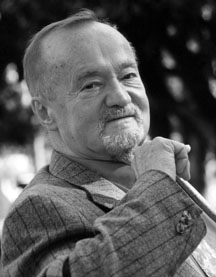 Stephen Toulmin (1922–2009)
Four Phases.
initiate_toulmin_sequence
Extract DATA. Construct CLAIM. No hedging allowed.
→ data + claim JSON
inject_logic_bridge
Build WARRANT and BACKING. Weak logic triggers the circuit breaker.
→ warrant + backing JSON
stress_test_argument
Adversarial REBUTTAL. Find the black swans.
→ rebuttal + qualifier JSON
render_verdict
Final Judgment. Sustained, Overruled, or Remanded.
→ verdict JSON
Up and Running.
Two commands. That's it.
1. Install
pip install toulmini2. Add to Claude Code
claude mcp add toulmini --scope user -- python -m toulmini.serverOr configure manually:
Claude Desktop
Add to your config file:
macOS: ~/Library/Application Support/Claude/claude_desktop_config.json
Windows: %APPDATA%\Claude\claude_desktop_config.json
{
  "mcpServers": {
    "toulmini": {
      "command": "python",
      "args": ["-m", "toulmini.server"]
    }
  }
}
Then restart Claude Desktop.
Cursor
Settings → Features → MCP Servers
{
  "toulmini": {
    "command": "python",
    "args": ["-m", "toulmini.server"]
  }
}
Windsurf
Settings → MCP Configuration
{
  "mcpServers": {
    "toulmini": {
      "command": "python",
      "args": ["-m", "toulmini.server"]
    }
  }
}
3. Test it
Ask your AI: "Use initiate_toulmin_sequence to analyze: Would immortality be a curse?"